Patterned Acrylic Sheets for Musical Instrument Decoration
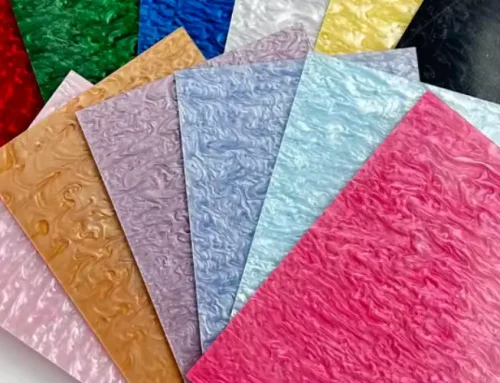
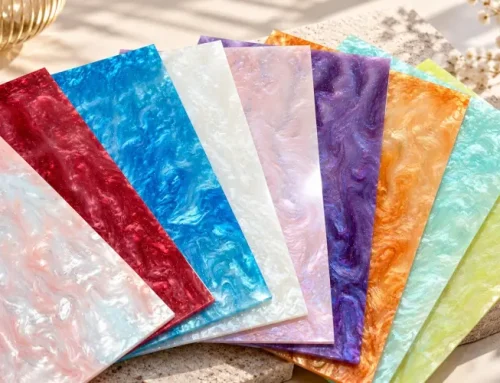
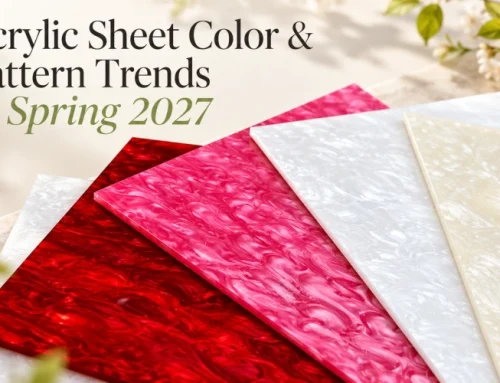
A patterned acrylic sheet gives instrument makers a way to carry a finish across several parts or an entire collection. Pearl swirls can link a guitar cover plate and an accordion trim piece. Amber tortoiseshell can work just as well on a bass pickguard as it does on a synthesizer side panel. Start by choosing a pattern that reads clearly at the size of the finished part.
Echo Plastic supplies decorative acrylic sheet stock for instrument makers, repair workshops, and parts fabricators. Buyers can choose full sheets for their own production or ask us to review custom sizes. The intended use, finished thickness, and mounting details help us recommend a sheet and prepare a meaningful sample.
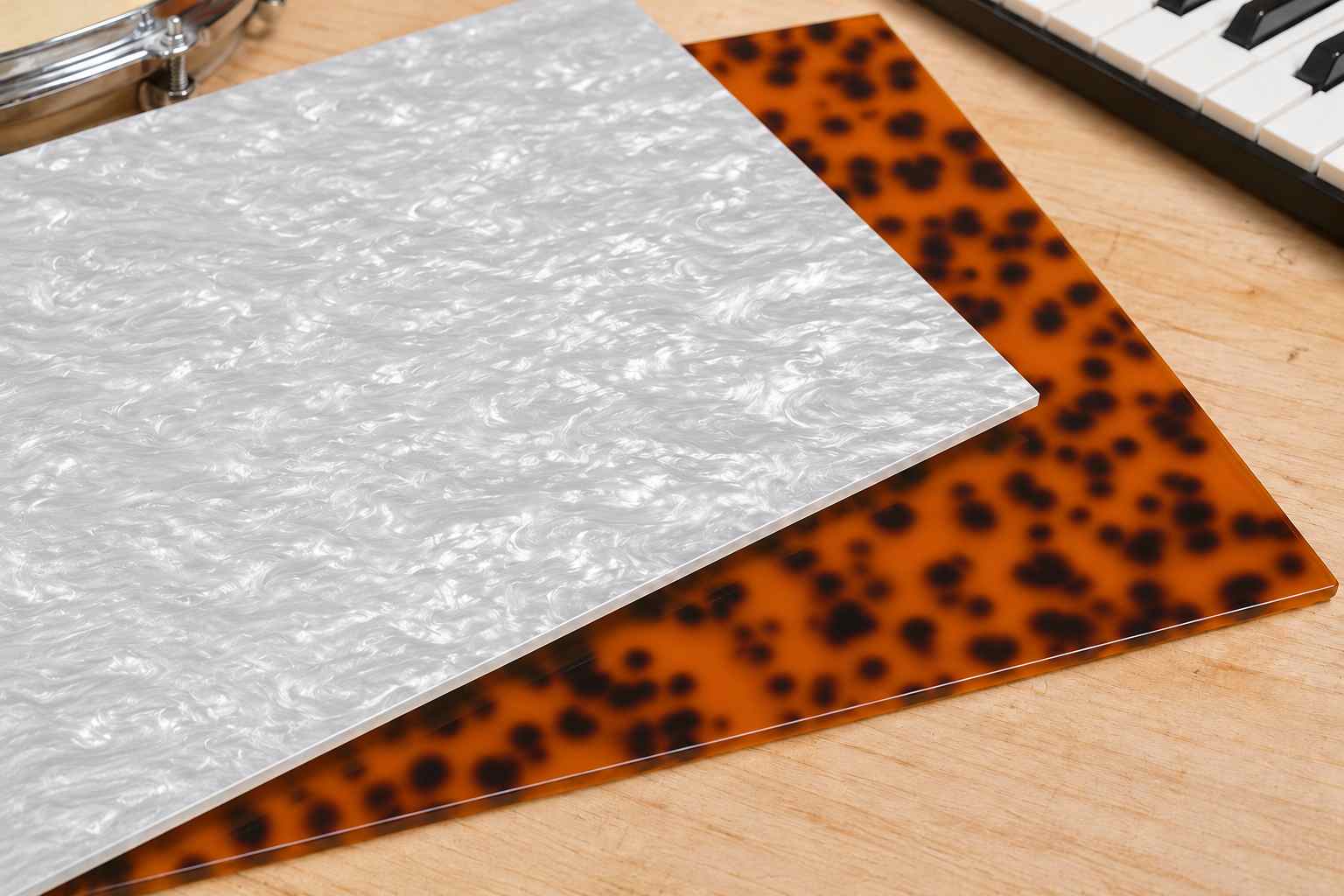
Compare Pearl and Tortoiseshell Acrylic
| Sheet option | Visual effect | What to check on a sample |
| Pearl Acrylic Sheet | Soft shimmer and flowing light or dark swirls. | Swirl scale and contrast on the actual instrument finish. |
| Tortoiseshell Acrylic Sheet | Mottled amber and brown with depth that varies by design. | Translucency, backing color, and light-to-dark balance. |
Guitars and Basses
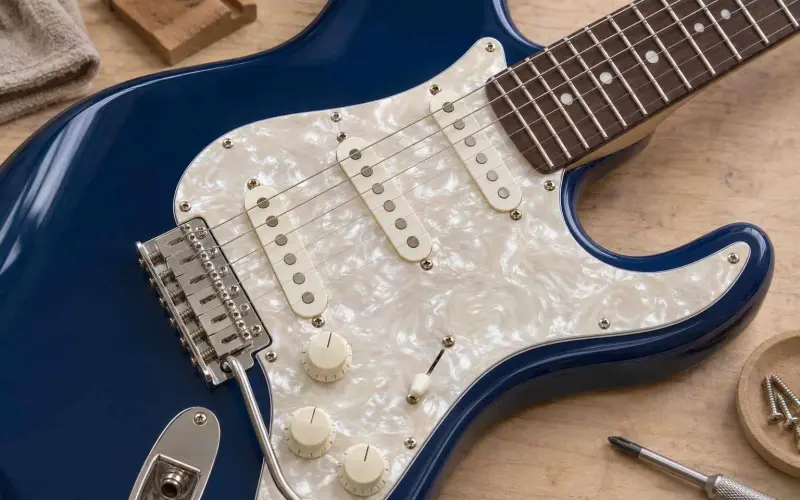
Instrument makers can cut patterned cast acrylic sheet for electric guitar and bass pickguards, truss rod covers, or control cavity covers. Pearl gives a pale body a softer accent or stands out against a dark finish. Large tortoiseshell mottles can look distinct on a pickguard but nearly disappear on a narrow cover. Compare both part outlines on the same swatch before reserving material. For shops buying sheets across several models, share the largest outline and the smallest cover in the same inquiry. That gives us a better basis for reviewing the pattern and usable sheet area.
For a replacement, measure the original thickness and check screw centers, pickup openings, and bridge clearance. Build a trial part before committing to a batch. Rigid acrylic pick blanks are another option for makers who can test the finished bevel and playing feel.
Accordions
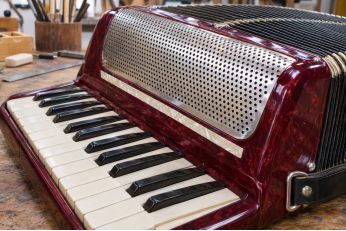
On a piano or button accordion, patterned sheet can be used for a flat casing insert, a nameplate backing, or a narrow trim piece next to the treble grille. A light pearl pattern can coordinate with the keys or the surrounding finish. Existing accordion grilles vary by model, so take measurements from the instrument and keep the vents and moving controls clear. For curved body coverings, first check the original cladding material and how it was fitted.
Drums and Percussion
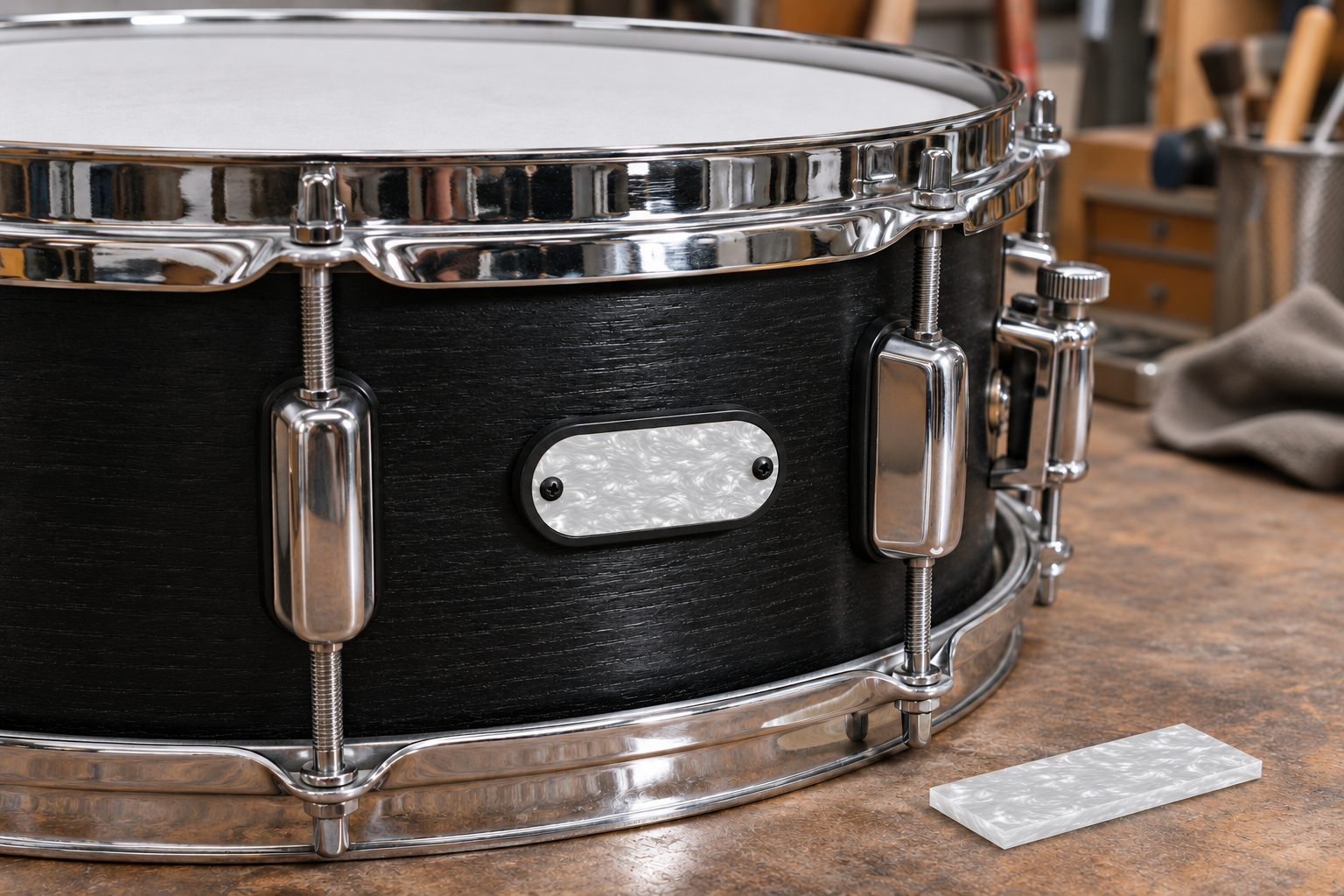
A small drum badge face or decorative nameplate can give a custom kit a recognizable finish without changing its playing surfaces. On a curved snare shell, check whether the badge needs a flat-backed holder or another mounting method designed for the shell radius. A piece that sits flat on the bench may rock when placed directly on the drum. Check clearances around lugs, screws, and vents before fixing the accent in place.
A full-shell wrap is a different material requirement. Conventional wrap stock must conform to the drum diameter, while the flat cast acrylic sheet discussed here is for rigid accents on suitable mounts.
Keyboards and Synthesizers
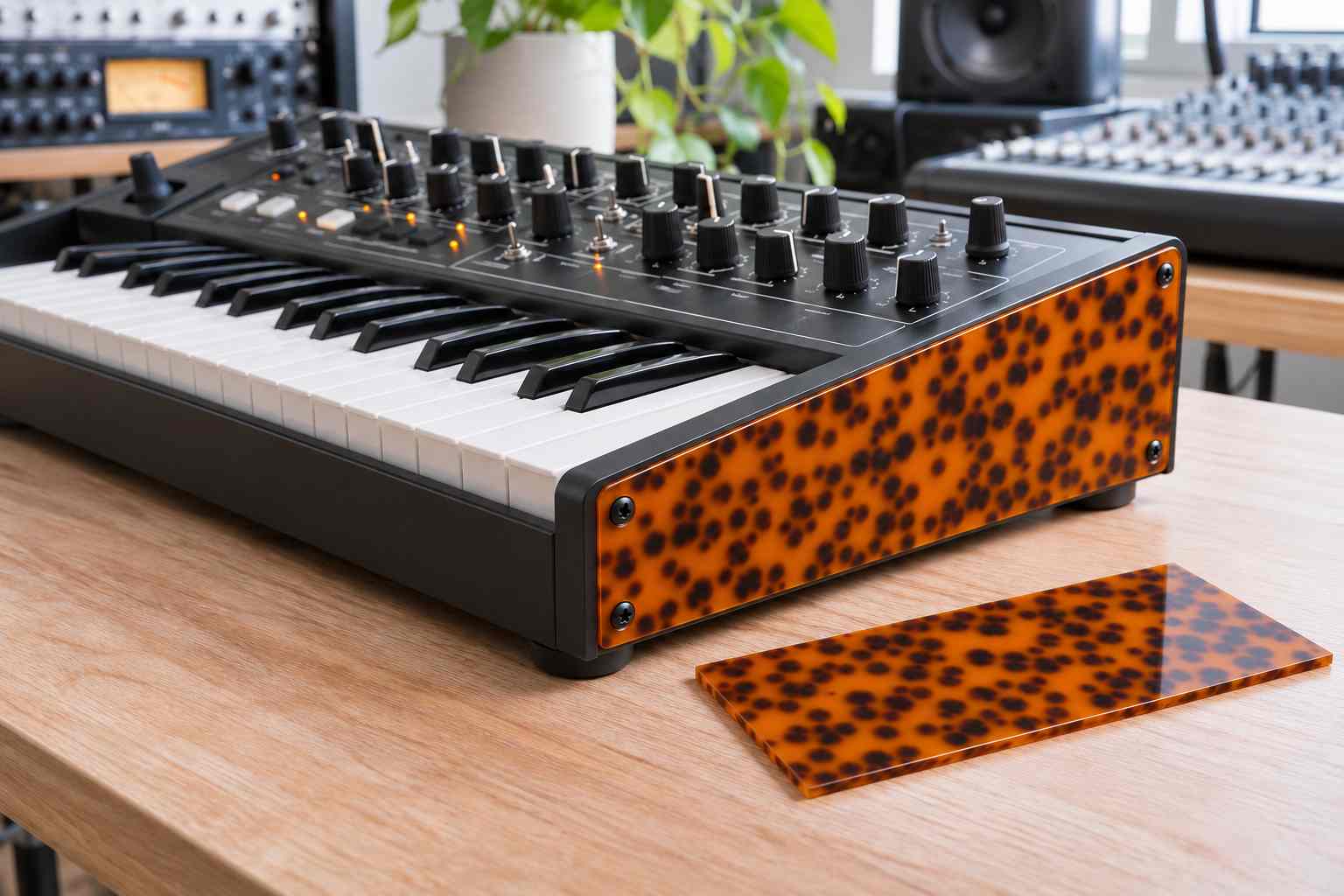
Small synthesizer makers often call the side covers end cheeks. A patterned acrylic facing can add color to an existing side plate or give a rack blank panel a matching finish. Check the hole spacing and the depth around screw heads, and leave vents, ports, and controls accessible. For a left and right pair, tell us which faces will show so the blanks can be laid out together. If the case will be made in more than one size, check whether one sheet layout can accommodate the different side panel lengths.
Sheet Specifications and Custom Sizes
For many flat decorative parts, nominal 3 mm cast acrylic is a starting point. Measure the recess or mounting space before selecting thickness. For example, our SW Pearl series lists 1270x2940mm, 1850x1040mm, and 1040×610 mm sheet formats, with thicknesses from 3 to 15 mm. Confirm availability for the exact pattern and thickness before planning the cutting layout.
When we review a sheet inquiry, the most useful reference is a swatch next to the actual instrument finish. Dark backing can change how translucent tortoiseshell reads, and a small cut part may capture only one area of a large swirl. For a coordinated batch, approve a representative sample and mark the visible face and any preferred pattern direction on the layout.
Frequently Asked Questions
Can I order full sheets or request cutting?
The minimum order quantity (MOQ) is one full sheet per in-stock color. For out-of-stock colors, the MOQ depends on the product code. If you request cut-to-size pieces from a full sheet, the material quote is based on the sheet purchased. Confirm availability and minimum order quantities for custom specifications. For custom sizes or outlines, send the dimensions or a full-scale vector drawing with units, thickness, quantity, and any critical fit dimensions. We can review the request through our cutting service.
Will each piece have the same pattern?
Pearl swirls and tortoiseshell mottling vary across a sheet and between batches. If adjacent pieces need a similar appearance, show us where they will sit and approve a small set of representative pieces before production.
Can I laser cut or machine the sheet?
Cast PMMA can be processed with suitable CO₂ laser or CNC equipment. Test an offcut of the selected sheet before the final run. For a countersunk hole or beveled edge, include the profile in your fabrication drawing.
Request Acrylic Sheet Samples and Pricing
Send your preferred pattern, sheet size, target thickness, quantity, and delivery country. Include a drawing if you want us to review custom sizes or prepare a material sample for a particular part.
Request Sheet Samples & a Quote!